.png)


For a decade, software teams have obsessed over velocity: faster deploys, tighter feedback loops, more features shipped per sprint.
But while shipping got faster, maintenance didn’t. Upgrades, dependency cleanups, and migrations still consume 30-50% of engineering time. This is invisible work that keeps the lights on but stalls innovation. And that’s the paradox: the more we accelerate, the more technical upkeep we create.
At Tidra, we believe the next leap in developer productivity isn’t about writing more code. It’s about maintaining code at scale, automatically, and safely.
Every engineering org feels it: the constant tradeoff between building and maintaining.
“We need to ship features — but half the team is tied up on upgrades.”
This isn’t a minor drag; it’s a massive drain. The average engineer spends roughly 14 hours per week on “keep-the-lights-on” tasks — dependency updates, security patches, migrations, and cleanup work.
For a 100-engineer company, that’s about 1,400 hours every week lost to repetitive maintenance. That’s $1.5 million in annual engineering capacity that never touches a product feature.
Teams have accepted that tradeoff as inevitable. It isn’t.
Developers don’t need AI to write more code. They need AI to plan and execute consistent changes across hundreds of repos, without derailing product delivery.
Traditional tools don’t address this:
The hard part isn’t the code edit; it’s the orchestration — defining scope, planning execution, coordinating PRs, and tracking progress across dozens or hundreds of repositories.
That’s where Tidra comes in.
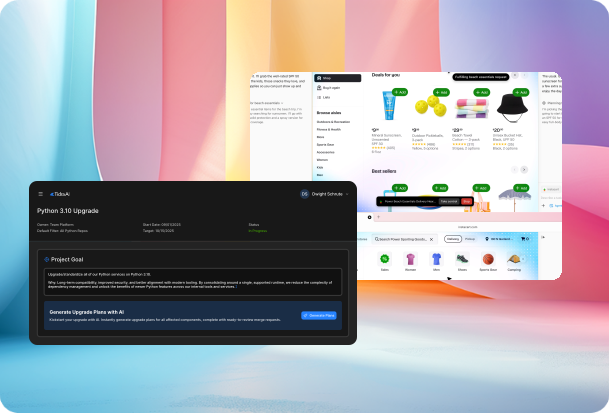
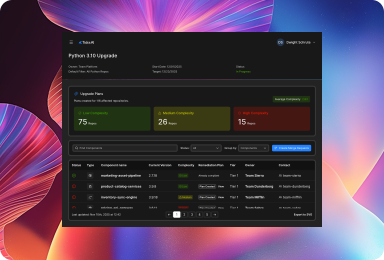
Tidra is an AI-powered maintenance agent built to run large-scale engineering initiatives — like upgrades, migrations, and deprecations — safely and consistently across many repos.
Here’s how it works:
The result? A month-long upgrade campaign turns into a few days of review and merge.
.svg)
Tidra exists to end the tradeoff between velocity and maintenance.
It gives engineering leaders back the time that’s been leaking out of their roadmap for years.
When maintenance becomes measurable and automated, it stops being an invisible cost and starts becoming a strategic advantage.
We see a clear shift ahead:
We don’t believe in magic “autonomous fixers.”
is built on
Tidra is built for trust, not hype.
Automation only works if you can trust it, and trust is built on visibility.
Tidra is already transforming how platform and DevOps teams handle:
Every initiative Tidra automates reclaims time that would have been lost to coordination and repetitive fixes, freeing engineers to focus on building the future.
Over the next five years, AI maintenance is expected to become as foundational as CI/CD pipelines are today.
Companies that adopt it early will deliver faster, stay more secure, and attract engineers who’d rather ship than babysit dependencies.
The future isn’t just “AI that writes your code.”
It’s AI that maintains your codebase so your team can keep moving.
Engineering productivity isn’t about doing more; it’s about doing less of what doesn’t matter.
Tidra’s mission is simple: Maintenance isn’t the cost of velocity. It’s the constraint we can now remove. And when that constraint disappears, software teams can finally do what they do best — build.
Request a demo of Tidra AI to see how we can help you reclaim hundreds of hours of engineering team time each month.
.webp)
.webp)